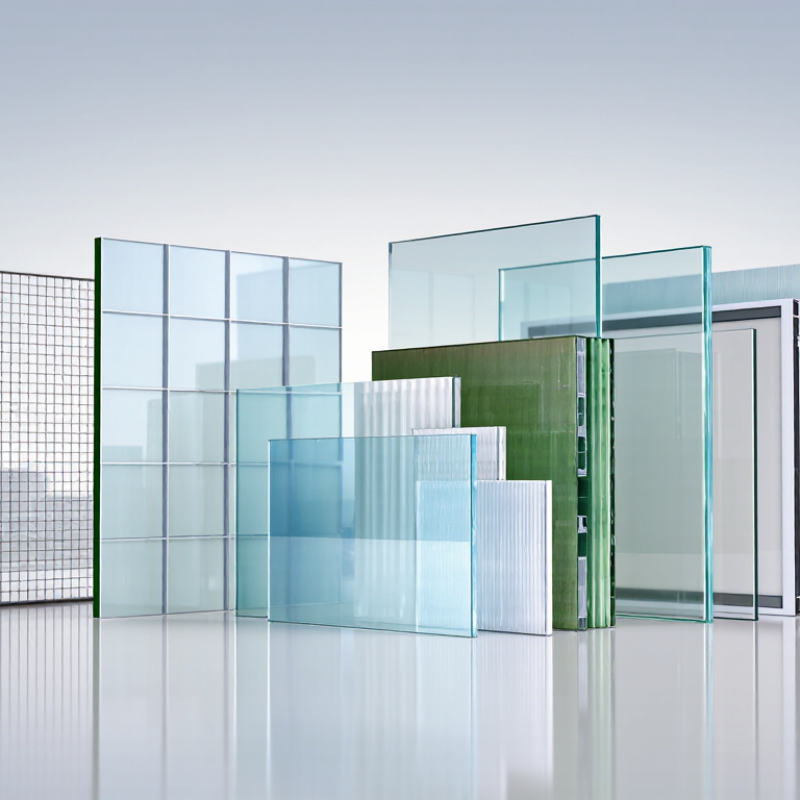
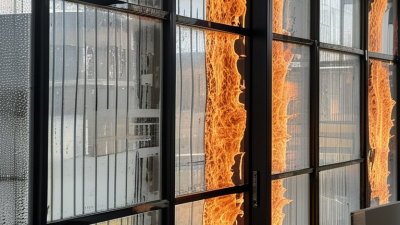
Choosing the right Fire-Resistant Glass in 2026 requires more than comparing thickness, appearance, or price. Global buyers must examine fire ratings, insulation performance, impact resistance, glazing systems, and verified test evidence. A product that performs well in one frame may fail when installed with an unsuitable seal, spacer, or fixing method. Details matter.
This guide introduces the main types available to international projects, including wired glass, ceramic glass, laminated fire-resistant glass, and intumescent multilayer systems. Each type responds differently to flames, radiant heat, smoke, sound, and daily wear. Some provide strong visibility. Others offer better thermal protection or design flexibility. The best option depends on the building’s use, opening size, exposure conditions, and local certification requirements.
Reliable purchasing should begin with documented performance, not attractive marketing language. Buyers should request independent test reports, classification details, production consistency records, and installation instructions. They should also confirm whether the complete glass-and-frame assembly has been tested together. Standards and approval pathways differ across regions, so one certificate may not satisfy every project authority. This point is often overlooked. Even experienced teams can select a technically impressive product that fails during approval or installation. The following overview aims to support clearer comparisons, practical questioning, and more responsible sourcing. It does not replace advice from qualified fire engineers, architects, or local compliance specialists.
For global buyers, EN 13501-2 classifications provide a practical language for comparing fire-resistant glass. E means integrity: the glass and its tested system resist flames and hot gases for a stated period. EW adds radiation control, limiting heat transfer to the protected side. EI includes integrity and insulation, restricting both fire passage and temperature rise.
The difference matters in real spaces. An E 30 pane may protect an escape route from flames for 30 minutes, but it may still transmit dangerous heat. An EW 30 system offers stronger radiant-heat control. An EI 30 system generally provides the highest thermal separation among these three classes. EN 13501-2 evaluates performance in minutes, not permanent resistance. The frame, seals, glazing beads, and installation must match the tested assembly. A strong pane in an unsuitable frame is still a weak barrier.
NFPA’s Fire Loss in the United States During 2023 estimated about 1.39 million fires and 3,670 civilian fire deaths. These figures reinforce why classification should not be selected by appearance or thickness alone. Buyers should request the complete classification, test evidence, dimensions, glazing orientation, and installation limits. Radiation is commonly assessed against a 15 kW/m² limit for EW performance. That detail is easy to miss. In practice, project teams sometimes choose EW where EI is needed, or specify EI without checking the wall construction. The standard helps, but judgment remains imperfect. Test reports should be read carefully.
2026 Top Types of Fire Resistant Glass for Global Buyers
For 30–120 minute fire protection, glass selection starts with the tested assembly, not appearance alone. Wired glass contains embedded metal mesh, which helps hold fragments after cracking. It can suit doors, screens, and older building designs. However, the wire does not automatically provide impact safety or a specific fire rating. Buyers should verify the complete test report, including thickness, frame, and fixing method.
Tempered fire-resistant glass uses controlled heating to improve strength and thermal performance. It may remain stable under sudden heat changes, but ordinary tempered glass is not automatically fire-rated. This distinction is often missed. A certified system must match the required duration, such as 30, 60, 90, or 120 minutes. Small changes around the edge can affect results.
Laminated fire-resistant glass combines multiple panes with a heat-reactive or specialized interlayer. When exposed to fire, the interlayer can form an opaque insulating layer and reduce heat transfer. It is useful where safety, visibility, and sound control matter together. Yet performance depends heavily on glass build-up and installation quality. Request test evidence for the exact configuration, not a similar product. Check labels, storage conditions, edge protection, and site handling. A damaged corner may remain unnoticed until the worst moment. Global buyers should also compare local testing terminology, because rating methods and documentation can differ between markets.
| Core Glass Type | Typical Construction | Common Fire-Rating Range | Primary Fire Performance | Typical Thickness | Safety Characteristics | Typical Applications | Main Limitations |
|---|---|---|---|---|---|---|---|
| Wired Fire-Resistant Glass | Clear or patterned glass with embedded steel wire mesh | Approximately 30–60 minutes in tested assemblies | Generally provides fire integrity by remaining in the frame and limiting flame and smoke passage | Commonly about 6–7 mm, depending on the listed product and assembly | Wire helps retain broken pieces, but traditional wired glass may not meet modern human-impact safety requirements without additional treatment | Fire doors, stairwell glazing, internal partitions, service areas and older building renovations | Lower impact resistance and visual quality than many modern fire-rated products; performance depends strongly on the frame and glazing method |
| Fire-Rated Tempered or Heat-Treated Monolithic Glass | Specially formulated monolithic glass that is heat-treated and tested as part of a fire-rated system; ordinary tempered glass is not automatically fire-rated | Approximately 30–120 minutes for specially listed products and assemblies | Primarily fire integrity; some systems may also provide limited radiant-heat control, subject to test classification | Commonly about 6–12 mm, with exact thickness determined by the tested system | Higher thermal-shock resistance than annealed glass; may break into smaller fragments, but safety performance must be confirmed separately | Vision panels, doors, internal screens, glazed walls and areas requiring a relatively clear appearance | Cannot be cut, drilled or substantially modified after tempering; maximum size, edge details and framing must match the approved test evidence |
| Fire-Rated Laminated Glass with Intumescent Interlayers | Two or more glass plies bonded with transparent intumescent interlayers that react and foam when exposed to fire | Approximately 30–120 minutes, depending on the number of plies, interlayer design and tested assembly | Can provide integrity and, in suitable configurations, insulation and reduced radiant heat transmission | Commonly about 10–25 mm, although higher ratings can require greater overall thickness | Good post-breakage retention and improved impact safety when manufactured to a safety-glazing specification | Curtain walls, interior partitions, fire-rated doors, atriums, staircases and transparent compartmentation | Higher cost and weight; interlayers may be sensitive to moisture, ultraviolet exposure and edge-seal quality if not properly specified |
| Multi-Layer Fire-Rated Laminated Glass | Multiple glass plies combined with several intumescent or fire-resistant interlayers for higher performance | Approximately 60–120 minutes in approved wall, door or façade assemblies | Designed to achieve higher integrity ratings and, in some assemblies, insulation or radiation-control classifications | Commonly about 18–40 mm or more, depending on the required rating and dimensions | Strong fragment retention and design flexibility; safety classification still needs to be verified for the complete product | High-rise façades, escape routes, large vision panels, fire-rated partitions and high-occupancy public buildings | Heavy, costly and more demanding to transport, install and support; requires compatible frames, seals and setting blocks |
| Tempered-Laminated Fire-Resistant Glass | Tempered or heat-treated glass plies combined with fire-resistant laminated interlayers | Approximately 30–120 minutes for tested configurations | Combines fire integrity with laminated fragment retention; insulation performance depends on the complete build-up | Commonly about 12–30 mm, depending on the glass plies and interlayer arrangement | Better resistance to thermal stress than annealed laminated glass and improved retention after breakage | Doors, partitions, façade glazing, overhead or sloped glazing and locations with higher impact requirements | Fabrication tolerances are strict; once tempered, the glass cannot be cut or drilled, and all components must conform to the tested design |

In 2026, global buyers are examining advanced fire-resistant glass beyond appearance and thickness. Ceramic fire glass is valued for its stable performance under severe heat. Its compact structure can resist cracking during prolonged exposure. However, clarity may change slightly after intense heating.
Gel-filled systems use transparent layers that react as temperatures rise. The gel absorbs heat and helps limit radiant transfer. These systems can support both visibility and insulation in glazed partitions. They feel ordinary before a fire.
ASTM E119 evaluates complete wall, door, floor, or curtain-wall assemblies, not glass alone. Test duration, furnace temperature, framing, seals, and installation all affect the result. A certified assembly may protect occupants for 60, 90, or 120 minutes, depending on its tested design. Buyers should request the full test report and field limitations. Check the frame, glazing beads, joint details, and maximum panel size. Small installation changes can weaken a tested system. This point is often overlooked.
Ceramic glass may suit areas needing strong heat resistance and daylight. Gel-filled glazing can be useful where insulation and visual transparency matter together. Yet no material fits every project. Real-world conditions can be messier than laboratory setups. Review local fire plans, exposure risks, and maintenance access before approval.
Fire-resistant glass is not judged by appearance alone. Its performance depends on the glass type, framing system, seals, and installation quality. Monolithic glass can provide fire integrity, while laminated and insulated constructions may offer stronger heat control and sound performance. Buyers should check whether the product is tested as a complete assembly, not as a loose pane.
UL 10C uses positive-pressure fire testing for door assemblies. This pressure can expose weak edges, seals, or glazing compounds. NFPA 252 also evaluates fire door assemblies, including their ability to resist flames and smoke during exposure.
ISO 834 uses a standard time-temperature curve for testing building elements. It commonly supports ratings such as 30, 60, 90, or 120 minutes.
These benchmarks are related, but they are not interchangeable. A 60-minute result under one method does not automatically prove compliance under another. Project teams should request the full test report, approved dimensions, glass thickness, frame details, and temperature limits. Small changes matter.
In practice, the frame often becomes the weak point. A strong pane cannot compensate for poor anchoring or an unsuitable gasket. Global buyers should also confirm local acceptance requirements before ordering. One area still deserves more attention: fire ratings are often compared like simple numbers, although the test conditions may differ greatly. That shortcut can create costly design errors.
For global buyers, fire-resistant glass selection should begin with the required fire period, not appearance.
A 20-minute partition may need a different glass system from a 180-minute fire door. Confirm the tested rating, glass classification, and complete frame assembly. Do not assess the pane alone. Testing usually covers integrity, insulation, or radiation control, depending on the project requirement.
A practical buyer matrix should include glass type, clear opening size, fire rating, and framing system.
Ceramic glass often suits smaller vision panels and demanding heat exposure. Intumescent laminated glass can provide clearer views, but its maximum size depends on the tested construction.
20–60-minute applications buyers may compare compact doors, screens, and internal partitions. 90–120 minutes thicker assemblies and certified insulated systems become more important. 180-minute requirement needs careful review of large openings, mullions, seals, and installation tolerances.
Size changes performance. A tall pane beside a stairwell may require stronger edge protection than a small lobby panel. Measure the visible opening, not only the glass cut size.
Check glazing pockets, shadow gaps, hardware, and replacement access before ordering. Site reviews often find that the glass rating was correct, but the frame or seal was not. That mistake is expensive.
The matrix is helpful, but it is not perfect. Local fire testing, engineering review, and current certificates should control the final decision. Consider transport packaging too; one chipped corner can delay an otherwise compliant installation.