2026 Best Conductive Glass Display Sensor Applications Explained?
The advancement of technology has led to a remarkable shift in display sensors. One notable innovation is the Conductive Glass Display Sensor. These sensors enhance user interaction with devices, providing smoother and more responsive experiences. Dr. Emily Thornton, a leading expert in sensor technology, stated, "Conductive Glass Display Sensors offer unparalleled precision in touch input."
As industries evolve, the demand for such sensors grows. Applications range from smart homes to modern automotive interfaces. The integration of conductive glass with display technology has opened new avenues. However, challenges remain. Issues such as cost-effectiveness and durability require further exploration.
While these sensors show promise, they are not without flaws. Some manufacturers still grapple with optimal production techniques. The balance between quality and affordability is delicate. Continuous improvements are necessary to meet market expectations and enhance user experience across various sectors. The journey of the Conductive Glass Display Sensor is just beginning.

Overview of Conductive Glass Display Sensors in 2026
Conductive glass display sensors are becoming vital in various applications by 2026. These sensors are integrated into smart devices and automobiles. They enhance touch sensitivity and improve user interaction. Their invisible design preserves aesthetics while offering functionality.
In 2026, industries will leverage conductive glass for innovation. Retailers may use these sensors for interactive displays, increasing customer engagement. In healthcare, they can be embedded into medical devices for ease of use.
Yet, there are challenges. The production process can be complex. Keeping costs low while maintaining quality is essential. Additionally, not all conductive glass options deliver the same performance.
As we explore this technology, it’s clear there are areas needing improvement. Researchers are working on enhancing durability. There’s a need for further investigation into eco-friendly materials. The efficiency of signal transformation also requires attention. Balancing innovation with practicality will be crucial in the coming years.
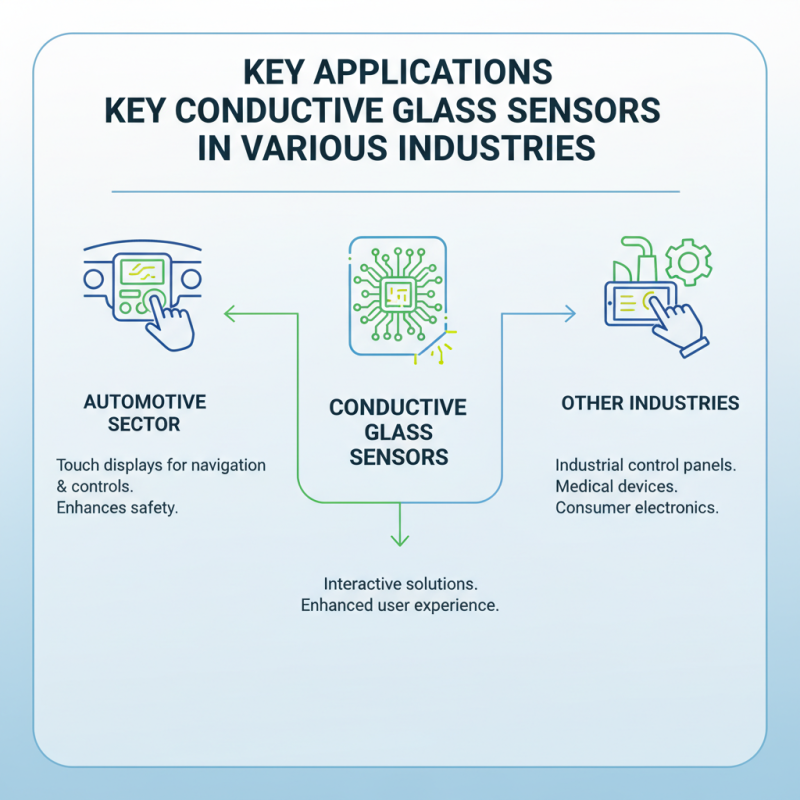
Key Applications of Conductive Glass Sensors in Various Industries
Conductive glass sensors are becoming essential in various industries. They provide interactive solutions that enhance user experiences. The automotive sector, for instance, uses these sensors in touch displays. Drivers can easily control navigation systems with a simple touch. This technology ensures safety by allowing quick responses.
In healthcare, conductive glass displays improve patient monitoring. They help in creating responsive interfaces for medical equipment. Doctors can access vital signs instantly, ensuring timely care. However, these applications sometimes face challenges in durability and responsiveness. The need for better calibration remains a point of improvement.
Retail environments benefit significantly from conductive glass sensors. Digital signage with touch capabilities attracts customers. Shoppers can browse products interactively and quickly learn about promotions. Still, ensuring the systems are user-friendly can be tricky. Frequent updates and maintenance become necessary to keep the technology relatable and engaging.
Market Trends and Growth Forecast for Conductive Glass Displays by 2026
The market for conductive glass displays is evolving rapidly. By 2026, it is projected to witness substantial growth. Several sectors, including automotive and consumer electronics, drive this trend. Conductive glass allows for touch-sensitive interfaces with excellent durability. It provides solutions that are both functional and visually appealing, which is crucial in modern design.
Yet, there are challenges facing this technology. Cost remains a significant barrier for widespread adoption. While many manufacturers explore new processes, the tech still misses the mark on affordability. Moreover, some applications are still in development phases. This raises questions about when they will be market-ready. The competition among alternatives adds complexity as well.
As advancements continue, sustainability becomes a focal point. Addressing environmental impacts is essential. Innovations like recycling conductive glass materials can lead to a greener approach. The industry's response to these pressures will shape future growth paths. Stakeholders must remain adaptable and receptive to changes. This highlights the need for ongoing research in this dynamic field.
2026 Best Conductive Glass Display Sensor Applications
Technological Innovations Enhancing Conductive Glass Sensor Performance
Conductive glass display sensors are on the rise. Technological advancements significantly boost their performance. Reports indicate a projected market growth of over 22% annually, driven by demand in various applications.
One of the key innovations is the integration of touch sensitivity with enhanced clarity. This is achieved through advanced coatings that improve light transmission. These coatings reduce glare and enhance user experience. New designs allow for thinner displays, making devices more portable. However, this may compromise durability. Balancing fragility with functionality is crucial.
Tips: Always assess how innovations impact practicality. Enhanced features might look great but can lead to user complaints if they break easily.
Another area of innovation is energy efficiency. Improved materials, like transparent conductors, reduce power consumption. This addresses the global need for sustainable solutions. However, not all innovations are flawless. Some new products face challenges in compatibility, leading to increased return rates. Monitoring consumer feedback is essential for future developments.
Tips: Stay updated with industry reports. They provide invaluable insights into emerging trends and potential pitfalls. Understanding market dynamics helps in making informed decisions.
Challenges and Solutions in Implementing Conductive Glass Display Technologies
Conductive glass display technologies are gaining traction in various applications. However, several challenges accompany this progress. For instance, achieving uniform conductivity across the surface can be challenging. Variations in temperature or material inconsistencies often result in uneven performance. This inconsistency can lead to user frustration.
Another issue is the integration with existing systems. Adapting current software to recognize and utilize these displays effectively can require significant time and resources. The learning curve for developers is steep. Additionally, the cost associated with these advanced displays can be a limiting factor for many manufacturers.
Finding affordable materials that meet the conductive requirements remains an ongoing challenge. Manufacturers may also struggle with scale-up. Producing these displays in large quantities without compromising quality is crucial for mass adoption. Many companies are still exploring solutions to these obstacles. Engaging with the right research partners could provide insights, but the process is often slow and resource-intensive.


 Phone
Phone Send Email
 whatsapp
 Facebook