What is Ito Conductive Glass and How is it Used?
Ito Conductive Glass is a remarkable innovation that combines transparency and electrical conductivity. This material is widely used in various applications, from touchscreens to solar panels. Dr. Emily Chen, a leading expert in materials science, once stated, "Ito Conductive Glass is revolutionizing how we interact with technology." Her insight captures the essence of this transformative glass.
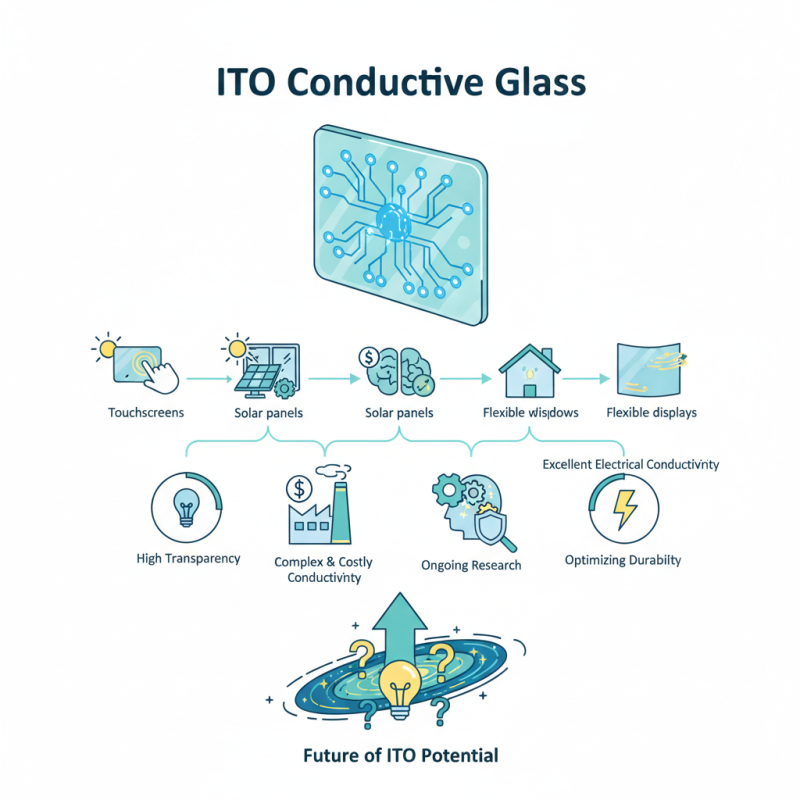
In today’s tech-driven world, the demand for efficient materials is increasing. Ito Conductive Glass fits this need perfectly. Manufacturers appreciate its high transparency and excellent electrical properties. Its unique composition allows for significant energy saving, especially in solar energy applications. However, the production process can be complex and costly.
Experts continue to explore new uses for Ito Conductive Glass. In particular, its role in smart windows and flexible displays is promising. Despite these advances, challenges remain, such as optimizing its durability and reducing production costs. As the industry evolves, ongoing research is essential. The future of Ito Conductive Glass holds incredible potential but also demands careful consideration and improvement.
Definition and Composition of Ito Conductive Glass
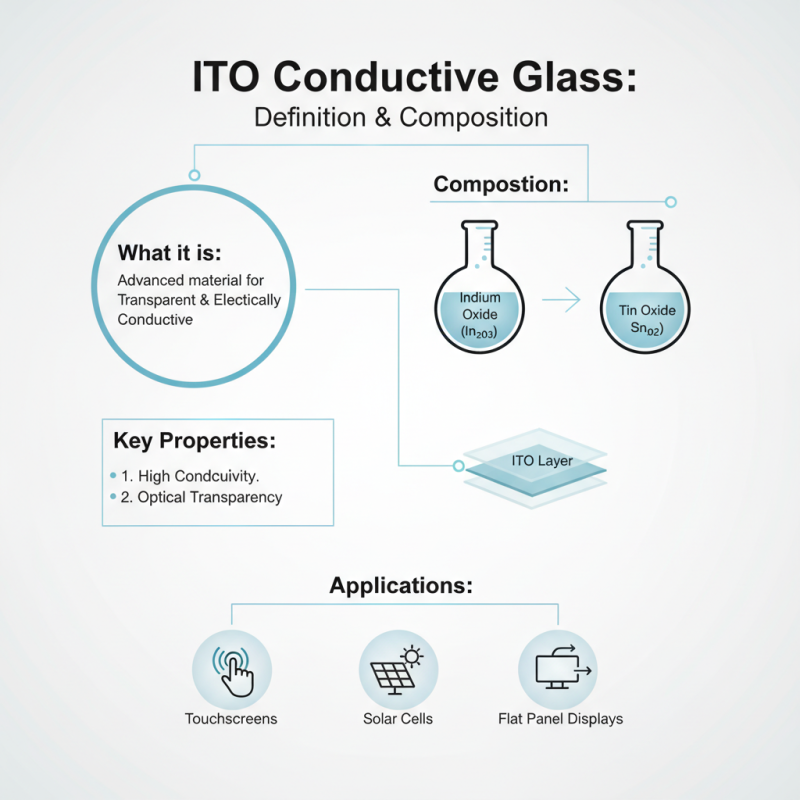
Indium Tin Oxide (ITO) conductive glass is an advanced material widely used in electronics. It is made from a combination of indium oxide and tin oxide. This unique composition allows for high conductivity while maintaining transparency. The thin, transparent layer of ITO is applied to glass or plastic substrates. This enables its use in various applications, including touchscreens and solar cells.
The ability to balance conductivity and transparency makes ITO glass valuable in modern technology. Its application ranges from displays in smartphones to energy-efficient windows. However, there are sustainability concerns surrounding the extraction of indium. The environmental impact of mining practices raises questions about the long-term viability of ITO.
ITO glass has limitations. It is brittle and can break easily under stress. Additionally, its cost can be prohibitive for some applications. Researchers are exploring alternatives that might offer similar properties without these drawbacks. The search for more sustainable options in conductive materials continues to be a significant challenge in the industry.
Key Properties of Ito Conductive Glass
Indium tin oxide (ITO) conductive glass is a significant advancement in material science. It features a transparent conductive layer that consists of indium oxide mixed with tin oxide. This combination offers unique properties, making it valuable in various applications, including touchscreens and solar cells.
Key properties of ITO conductive glass include:
- High optical transparency, which typically ranges from 80% to 90% in the visible spectrum.
- Excellent electrical conductivity, with a sheet resistance often less than 30 ohms per square.
- The ability to withstand high temperatures, critical for applications involving heat.
Industry reports suggest that the market for ITO-based products is expected to
grow significantly, driven by the rising demand in consumer electronics.
Tips: When selecting ITO glass, consider the balance between conductivity and transparency. Evaluate the specific needs of your project before deciding. The manufacturing process can impact quality; ensure your supplier adheres to strict standards. It's important to remember that while ITO shows promise, there are ongoing challenges in sourcing indium sustainably.
Common Applications of Ito Conductive Glass in Technology
ITO conductive glass, made from indium tin oxide, has numerous applications in technology. One significant area is in flat panel displays. The transparent conductive layer enables touch sensitivity and allows for high-quality visuals. This feature is crucial for smartphones and tablets, making touchscreens responsive.
Another common application is in solar cells. ITO glass enhances the efficiency of photovoltaic cells. Its transparency allows sunlight to penetrate while conducting electrical currents. This application can harness solar energy more effectively. However, the cost of ITO can be high, which may limit its use in some projects.
In the realm of OLED technologies, ITO conductive glass is vital. It facilitates the display of vibrant colors and images. Yet, issues like scratching and brittleness can be concerns. The quest for alternatives continues, seeking materials that offer similar benefits but at a lower cost. Overall, ITO glass plays a key role in advancing modern technology.
Manufacturing Process of Ito Conductive Glass
The manufacturing process of Indium Tin Oxide (ITO) conductive glass involves several key steps. Initially, high-purity indium oxide and tin oxide powders are mixed. This mixture is then subject to high-temperature sintering, resulting in a conductive ceramic material. According to a report by Markets and Markets, ITO glass is crucial for applications in touch screens, displays, and solar cells, highlighting its growing relevance in the electronics sector.
Once the sintered material is created, the process continues with deposition techniques. Physical vapor deposition (PVD) or chemical vapor deposition (CVD) is commonly employed to form a thin ITO layer on glass substrates. This layer typically ranges from 100 to 200 nm in thickness. The quality of this layer significantly influences the glass's conductivity and transparency. A research study from Research and Markets underscores that the optoelectronic properties of ITO directly impact device performance in consumer electronics.
Challenges exist in the manufacturing process. Achieving uniform thickness can be difficult, affecting electrical properties. Moreover, controlling impurities during synthesis is crucial, as they can degrade the material's quality. Despite these challenges, advancements in technology offer potential solutions, ensuring the continued evolution of ITO conductive glass in high-tech applications.
What is Ito Conductive Glass and How is it Used? - Manufacturing Process of Ito Conductive Glass
| Property |
Description |
| Material |
Indium Tin Oxide (ITO) |
| Conductivity |
Provides excellent electrical conductivity |
| Transparency |
High transparency to visible light |
| Thickness |
Typically ranges from 100 nm to 500 nm |
| Applications |
Used in touch screens, LCDs, solar cells, and more |
| Manufacturing Process |
Sputtering, chemical vapor deposition, and sol-gel methods |
| Environmental Impact |
Challenges in recycling; indium extraction can be harmful |
| Future Trends |
Development of alternative materials to reduce reliance on indium |
Advantages and Limitations of Using Ito Conductive Glass
ITO conductive glass, made of indium tin oxide,
has distinct advantages and limitations. Its high transparency and electrical conductivity make it suitable
for various applications. Industries such as displays and solar panels often rely on ITO for touch screens
and photovoltaic elements. A report from Transparency Market Research indicates that the global ITO market
is expected to grow at a CAGR of 5.2% through 2025,
highlighting its increasing importance.
Despite these benefits, ITO has drawbacks. Its brittleness raises concerns about durability in certain
applications. Additionally, the sourcing of indium presents sustainability issues. A study by the
International Journal of Recycling of Materials emphasizes the
need for recycling strategies, given indium's rarity. This precarious
balance creates challenges for continued use in evolving technologies.
Tips: Regular maintenance of ITO
components can enhance lifespan. Consider alternative materials for specific applications. Research ongoing
developments in conductive technologies to stay informed. Ensure decisions align with sustainability goals.
Emphasizing transparency around these environmental aspects may improve industry practices.


 Phone
Phone Send Email
 whatsapp
 Facebook